A cultural vision taking shape in Moose Jaw

Imagine a city where every cultural group feels seen, heard, and valued. In Moose Jaw, that vision is taking shape through the city’s first-ever Cultural Plan. Initiated by the Cultural Diversity Committee, the plan aims to weave the rich tapestry of Moose Jaw’s diverse communities into the very fabric of the city’s future.

Officially adopted by the City of Moose Jaw in 2024, the Moose Jaw Community Cultural Action Plan now serves as a framework to strengthen the city’s cultural landscape in the years to come. The journey began in 2021, when committee members recognized a gap in public awareness around the many diverse cultural groups, programs, and events in the community. What followed was a thoughtful process that included research, community consultations, and collaborative planning.

Throughout the multi-year effort, the committee remained focused on one priority: ensuring that diverse communities were meaningfully included and engaged at every step.

“Diversity is a core community-identified priority. So, when you look at our Cultural Plan, there’s a list of priorities, and one of those is diversity,” says Craig Hemingway, director of strategic growth, City of Moose Jaw.

The community responded well, with 20-30 people regularly attending cultural planning meetings. One major challenge identified early on was that cultural groups did not have enough resources, and there was a lack of collaboration. Hayley Hart-Rushinko, manager of communications and Indigenous relations, City of Moose Jaw, says that “Because [organizations] don’t have a ton of time or a ton of resources, they end up working in silos.”

Involving many voices in the planning process had a twofold impact. First, it allowed the committee to hear diverse perspectives and move forward with a shared understanding. It also created opportunities for groups to connect, collaborate, and raise awareness of their work.

“The past few years, we’ve been able to host consistent free public events … along with meeting with the cultural committee members on a regular basis, who might not otherwise get a chance to speak with each other and even just collaborate within a year,” Hart-Rushinko says.

For communities that are looking to start on the cultural planning journey, Hemingway says that consistency is key for keeping the community engaged through a long process.

“As a member, I want to be in a meeting, and at the next meeting, to see where that input went, and how it was used and the progress that’s been made,” he says.

Hart-Rushinko says that developing this plan helped the city build a stronger, more connected community, while raising awareness among community groups. The biggest challenge, she adds, is “making sure that [groups] stay engaged, because these plans can take a lot of time, and sometimes it can seem like not a lot is happening — it just takes patience to build that foundation.”

Rider Nation: The Game To Play

Green is its colour, Scratch & Win is the game.

Launching only-in Saskatchewan at LottoSpot retailers on May 12, is Rider Nation – a Scratch & Win ticket loaded with a chance to win experiential, merchandise and cash prizes of up to $75,000! The $7 Saskatchewan Roughrider themed Scratch & Win ticket features a seven-line matching symbol game, as well as a bonus scratch area.

The ticket not only celebrates the 2025 champion Saskatchewan Roughriders and the more than 30-year partnership between the Riders and Sask Lotteries, but the fans and community.

“Sask Lotteries is proud of its over 50 years of community support including over three decades of Riders partnership,” said Sask Lotteries Vice Chair Shawn Waskewich. “Together with this collaboration, we look to celebrate and share our passion of sport that we know improves the lives and well-being of Saskatchewan residents. Sport is, truly, more than a game and this ticket embodies that. We are so excited to see this ticket at LottoSpot retailers and share in the excitement with our winners through the amazing prizes.”

Like all LottoSpot sold products in Saskatchewan, sale proceeds of the Rider Nation ticket are directed to more than 12,000 sport, culture and recreation organizations through Sask Lotteries. Since 1974, more than $1.4 billion has been given to help residents learn, play and grow through the lottery sales.

Sask Lotteries’ community sentiment is something shared with the Riders and celebrating the fans through special prize experiences was an important part of the ticket for the organization.

“Supporting amateur sport in this province is something that has always been important to our Club, said Roughriders President and CEO Craig Reynolds. “Through our partnership with Sask Lotteries and this exciting new ticket, we will be able to continue to help support sport organizations across the province, creating opportunities for kids, families and communities to stay active and connected. That’s something we’re incredibly proud to be part of.”

Top experiential prizes include 10 years of season tickets (2027-2036), a premium suite for up to 21 people with Roughrider celebrity appearances at the 2027 Home Opener and the 2027 Labour Day Classic. AGT Lounge tickets for the 2027 Labour Day Classic and season tickets for the 2027 season.

In addition, the bonus area gives players a chance to win either an autographed Roughrider jersey or a $100 gift card to the Riders Store. Cash prizes on the ticket range from $7 to up to two $75,000 prizes. Visit any LottoSpot retailer in Saskatchewan. Learn more about the ticket at sasklotteries.ca

National Volunteer Week April 19-25

Saskatchewan’s sport, culture and recreation system is nourished by the province’s 330,000 volunteers and from April 19-25, the dedication of volunteers will be celebrated from coast to coast under the theme of ‘Ignite Volunteerism.’

It is because of volunteers’ commitment that Sask Lotteries’ funding can make a difference in volunteer-led sport, culture and recreation programs.

Sask Lotteries knows that every second a volunteer gives to the community, an innumerable number of individuals feel the impact. As part of the celebration, Sask Lotteries, along with Sask Sport is saying thank you to the volunteers in Saskatchewan, who help make the more than 12,000 lottery-funded sport, culture and recreation activities possible.

When thanking volunteers on social media, organizations are encouraged to use the hashtags: #IgniteVolunteerism, #NVW2026

CMHA North Battleford members curling, bowling their way to better mental health 

Have you ever gone for a walk to clear your head? That age-old activity is rooted in a basic concept that scientific research has more recently come to support – simply put, that there is a direct link between one’s physical and mental health. 

As a result, many mental health organizations include a variety of recreational activities among their support programs. That includes the North Battleford branch of the Canadian Mental Health Association. 

“We all know our overall well-being impacts various degrees of things, so we want to make sure we’re physically active, which keeps our mind healthy and keeps us physically fit. And there’s also a social piece of it; connecting with other people, learning social skills, reducing isolation,” CMHA North Battleford executive director Michele Winterholt explained. 

“And just for our spirit, doing fun things and having greatfulness for the ability to do so.” 

The North Battleford branch supports nearly 130 members. Roughly half of those, many of whom live with lifelong mental illness or mental health challenges or are in addictions recovery, regularly take part in its recreation and social wellness programs.  

However, certain activities can be difficult for individuals to access due to cost or accessibility issues. As part of the effort to eliminate those barriers, funding support from Sask Lotteries has allowed the branch to provide its clients with more opportunities to take part in two fun, social sports: curling and bowling.  

“We had bowling and curling in our activities a few years ago and just due to costs, we had limited them. Now we’re able to bring these programs back to life for our participants,” Winterholt said. 

Instead of one curling outing per month, it’s now a weekly activity. Bowling excursions, which had been relatively infrequent, are now a once- or twice-monthly occurrence. 

Additionally, where clients had previously needed to cover a portion of their own costs, those fees are now fully covered. The increased frequency and cost reduction, in turn, means more people can take part. 

There’s an additional domino effect of the funding support in that it frees up additional CMHA resource streams to bolster other recreation and wellness programs such as educational lunches or community excursions in the Battlefords area. 

“These types of programs sometimes aren’t possible without the support and funding of others, so we’re thankful and grateful to those that do support our programming because it’s all about serving our members and keeping them well and encouraging them on their journey,” Winterholt said. 

And every curling rock or bowling ball thrown has the potential to be another step on that path. 

Sask roots helped Hebert grow into three-time Olympian

By Ryan Flaherty for Sask Lotteries / Sask Sport

Ben Hebert has won virtually everything there is to win in the sport of curling but competing at the Olympic Games just hits different. 

The five-time Brier winner and two-time world champion who is considered by many to be the greatest male lead in Canadian history is set to represent the country in his third Olympics at the 2026 Milano Cortina Winter Games and he understands how precious the opportunity is. 

“I think all of us probably dreamt of going to the Olympics maybe once or going to a couple of Briers and to be going three times is a little bit surreal,” Hebert said. 

“So, you know, I don’t take it for granted. I’m really excited, and there’s not too many things that get the old butterflies and nerves going these days for me in curling, but this is one of them.” 

Hebert has experienced the full spectrum of Olympic emotions, from the thrill of victory to the agony of defeat. After winning gold at the 2010 Games in Vancouver on a squad skipped by Kevin Martin, he returned with Kevin Koe’s team eight years later in Pyeongchang, South Korea, but came home empty-handed following a fourth-place finish. 

Now he’s getting another shot at the most elusive title in the sport, this time on a team featuring Brad Jacobs at skip, Marc Kennedy at third, Brett Gallant at second, plus fifth Tyler Tardi. While Hebert has gained perspective in the years since that first Olympic gold, his competitive fire still burns just as hot. 

“I’m a pretty nice guy off the ice but when I get on that ice, I’m a psychopath. I really want to win and that’s what made me successful my whole career,” he said. 

“We’re all married. We have kids. We know what’s the most important thing in our life is, no questions asked. I know. But for 10 days, I’m going to be dialed into curling, and that’s going to be the most important thing for me.” 

The seeds of Hebert’s competitive drive were planted, fittingly, in the country’s agricultural heartland. Born and raised in Regina, he grew up playing a variety of sports including baseball, football, hockey and lacrosse. But it was curling that rose head and shoulders above the rest. 

Once he had focused his athletic attention on the pebbled ice, success soon followed. Hebert got his first taste of international glory while playing out of his home province, winning the 2003 World Junior Men’s Championship as the fifth on a team skipped by Steve Laycock. Two years later he made his Brier debut, playing lead in the first of back-to-back national championship spiels with Pat Simmons and Team Saskatchewan. 

While he subsequently moved to Alberta, where he’s made his home and enjoyed a Hall of Fame-worthy career ever since, Hebert never lost touch with his roots. 

“I still get messages today from my high school football coaches, my coaches that coached me at North Regina Little League, they still keep in touch. And to this day, probably outside of these five guys (on the team), because we spend so much time together, all the people I met along the way are still probably my best friends in my whole entire life,” he said. 

It’s not just emotional support that Hebert has received from Saskatchewan. The province also provided him with a financial boost in those early years through the Sask Lotteries Trust Fund, Sask Sport and Canadian Sport Centre Saskatchewan, which helped facilitate his pursuit of curling excellence. 

“I’ve been doing some stuff with them through Level 10 (Fitness) at the gym, covering my gym costs, even from way back in the day when I worked out at the Sask Hotel at the Crown Club in the basement,” he said. 

“They’ve been super supportive to me all the way up, and there’s no better province for me that I could have chosen to grow up in.” 

It’s provided the foundation on which Hebert has built a championship career, one that he’s hoping will still produce at least one more moment of triumph. He’ll be representing not just Saskatchewan or Alberta but all of Canada this time and a second Olympic gold medal would feel all that much sweeter given the journey he’s taken to get there, and the teammates with whom he hopes to share it. 

“Win or lose, we’ve had great careers. You know, you’re going to see some of these guys in the Hall of Fame. (They’re) some of the best curlers Canada’s ever seen. But that’s not going to take away from the level of intensity and focus and desire we have to come home with a medal for, you know, not just each other, but obviously our country. 

“It’s going to be hard on the gas.” 

Follow along Ben’s schedule and results.

Cheer on Sask for the Milano Cortina Olympic Winter Games

Following years of dedication to sport through the grassroots level to high performance, 21 individuals from Saskatchewan will represent the province at the Olympic Winter Games February 6-22  in Milano Cortina. 

The contingent will feature six officials, four support and mission staff, four coaches and seven athletes with ties to the province. 

Regina’s Mark McMorris will be looking to add more hardware to his already impressive tally. The three-time Olympic bronze medallist in snowboard slopestyle will be making his fourth Games’ appearance when he travels to Milano Cortina.  

Making their third trips to the Olympics will be Saskatoon’s Emily Clark, who has previously won Olympic gold and silver with the Canadian women’s hockey team, and Olympic gold medal-winning curler Ben Hebert who hails from Regina. 

Meanwhile, four Saskatchewan athletes will make their Olympic debuts, including Saskatoon’s Darcy Kuemper and Saskatoon-born Brandon Hagel with men’s hockey and Regina’s Logan Pletz in biathlon, as well as Saskatoon’s Maia Schwinghammer in freestyle skiing.  

“Congratulations to the athletes, coaches, officials and support staff who will be representing our province on Team Canada at the 2026 Winter Olympic Games in Italy,” said Alana Ross, Minister of Parks, Culture and Sport. “Thank you for inspiring our province, and our country. Know that the entire province will be behind you every step of the way. Best of luck in Milano Cortina.” 

On the coaching front Olympic bronze medallist Lyndon Rush (bobsleigh) will return to his fifth Games, third as a coach, after attending previously as an athlete, Adam Burwell (snowboard) is attending his fourth Olympics, Laine Peters (mixed doubles curling) will attend her second Games and William Dutton (long track speed skating) will be at his first Games as a coach after attending once before as an athlete. 

Team Canada mission staff will include Lisa Hoffart as the Mental Health Lead, while Chris Dornan will assist as a media attaché. Ryan Getzlaf will accompany the men’s hockey team as a player relations advisor and Jodi Perras will support the Canadian cross country skiing team as a massage therapist. 

Saskatchewan will also have six officials in attendance, with Alex Clarke, Michelle McKenna, Cianna Murray and Tarrington Wyonzek at the hockey rink, Karen Howard judging figure skating, and Moyca Stoffel as an assistant referee in long track speed skating.

“On behalf of the amateur sport system in our province, I would like to congratulate all the athletes, coaches, mission and support staff, as well as officials, on reaching amateur sport’s grandest stage,” said Amy Prokop, Sask Sport Chair. “Attending the Olympic Games is a terrific achievement, and each member of the contingent should be applauded for their accomplishments as should all those who assisted them along their journey. Each of these individuals are incredible ambassadors for sport in Saskatchewan and they each make us Sask Proud.” 

Join Sask Sport, Sask Lotteries and the Canadian Sport Centre Saskatchewan on cheeronsask.ca for everything you need to know about the Olympics and Paralympics. The website documents the athletes, coaches, officials and staff from Saskatchewan on their journey to the Olympic and Paralympic Games, features a comprehensive schedule specific to the Saskatchewan athletes that includes date, times, viewing options and results and will house daily recaps with results and information specific to the Saskatchewan contingent. It will also feature an aggregate of news from the Canadian Olympic Committee, Canadian Paralympic Committee and National Sport Organizations.   

Follow along on social media on @SaskSport, @SaskLotteries and @CSCSaskatchewan and use the hashtag #SaskProud for further updates and information from cheeronsask.ca.    

Milano Cortina Olympic Winter Games – Saskatchewan Contingent 

ATHLETES 

Emily Clark – Women’s Hockey, Saskatoon 
Ben Hebert – Men’s Curling, Regina 
Darcy Kuemper – Men’s Hockey, Saskatoon 
Brandon Hagel – Men’s Hockey, Saskatoon
Mark McMorris – Men’s Snowboard Slopestyle and Big Air, Regina 
Logan Pletz – Men’s Biathlon, Regina 
Maia Schwinghammer – Women’s Freestyle Skiing, Saskatoon 

COACHES 

Adam Burwell – Snowboard, Regina 
William Dutton – Long Track Speed Skating, Humboldt 
Laine Peters – Mixed Doubles Curling, Carrot River
Lyndon Rush – Bobsleigh, Humboldt 
 
SUPPORT STAFF 

Chris Dornan – Bobsleigh Media Attache, Saskatoon 
Ryan Getzlaf – Men’s Hockey Player Relations Advisor, Regina 
Lisa Hoffart – Team Canada Mental Health Lead, Regina 
Jodi Perras – Cross Country Skiing Massage Therapist, North Battleford 

OFFICIALS 

Alex Clarke – Hockey, Drake 
Karen Howard – Figure Skating, Regina
Michelle McKenna – Hockey, Moose Jaw 
Cianna Murray – Hockey, Cudworth 
Moyca Stoffel – Long Track Speed Skating, Saskatoon
Tarrington Wyonzek, Hockey, Yorkton 

Special visits open Wonderhub to kids facing health, sensory challenges

By Ryan Flaherty for Sask Lotteries

Visiting a museum can be a fun and educational experience, but it can also present challenges for those who are immunocompromised or deal with sensory sensitivities, to such an extent that they may not even be able to visit at all.

With that in mind, the employees at Saskatchewan’s only children’s museum have taken steps to ensure that everyone has an opportunity to enjoy a trip to the facility. The Nutrien Wonderhub has introduced a series of immune-safe and sensory-friendly visits that allow kids and caregivers who need extra safeguards to still experience everything the museum has to offer.

“Parents and caregivers reached out asking for designated low-sensory times and opportunities for visits with enhanced health and safety protocols in place. Many shared that they wanted to bring their children to the Wonderhub, but the realities of the often busy environment made it difficult or impossible,” marketing and communications coordinator Courtney Troesch explained.

For children and families who are immunocompromised, the immune-safe visits feature reduced capacity, staggered activities, enhanced cleaning and mask protocols. And for those who live with sensory sensitivities, the sensory-friendly visits include lowered lighting, no background music, adjusted sound exhibits and sensory bags to create a calm and welcoming atmosphere.

“By intentionally adjusting the environment and programming, these visits create an experience where families don’t have to worry about health risks or sensory overload. They can simply play, explore and learn together at their own pace. We believe that every child has the right to play and these visits help make that possible,” Troesch said.

Funding from the Sask Lotteries Community Grant Program has been key to making the visits not only possible, but free for families throughout the 2025-26 season. The support helps cover extended Wonderhub staffing, enhanced cleaning, sensory equipment, extra accessibility measures and even the creation of programming designed specifically for the special visits.

“We’re grateful for this partnership. This investment allows us to reduce barriers for families who benefit from a more specialized museum experience and ensures that cost is never an obstacle to participation,” Troesch said.

There are three remaining opportunities for families to take advantage of each of the specialized visits. Upcoming immune-safe visits for 2025-26 are scheduled for February 23 and March 30, while sensory-friendly visits take place on January 26 and March 30. Designated times for each can be found by visiting wonderhub.ca. Pre-registration is required as space for each visit is limited.

Vanier Cup coming to Regina with assistance from Sask Lotteries

It’s been nearly 20 years since the Vanier Cup was last in Saskatchewan, but it’s coming back on Nov. 22 as the University of Regina hosts the U SPORTS national football championship for the first time.

Back in 2006, the title game was played at the University of Saskatchewan as the hometown Huskies took on the Laval et Or Rouge. That game marked the first time the Vanier Cup had been held outside of Eastern Canada. Now, two decades later, Saturday’s game at Mosaic Stadium will be only the third time in the Vanier Cup’s 60-year history that it will be played out west.

“We’re so excited,” said Lisa Robertson, Director of Sport, Community Engagement and Athlete Development at the University of Regina. “We’re honoured to have the opportunity. It’s a really big deal for our province and our city.”

Bringing the Vanier Cup to Regina has been a multi-year process. It began with conversations to weigh backing for the game from the local community and determine which year would work best for hosting, as it needed to work around another signature annual event in Regina, the Agribition. In the end, 2025 had the perfect window for both events to take place, so the university made their bid.

“It’s a big game to host and we knew we had a phenomenal facility [Mosaic Stadium] to host it in, but we wanted to make sure we had that community support. And when we decided to go forward, we worked with Tourism Regina to make the bid,” said Robertson. “It went to the U SPORTS selection committee and we found out about a year ago that we were successful.”

Within their bid, the University of Regina noted available funding support, which included a Sask Sport hosting grant, funded by the Sask Lotteries Trust Fund, as well as sponsorship for the event through Sask Lotteries itself. That’s on top of the sponsorship and funding that Sask Lotteries provides to the University of Regina, as well as the University of Saskatchewan, on an annual basis.

“Sask Lotteries is such a great funder of university sport. I can’t speak highly enough of it,” said Robertson. “It was something new when I came here from Alberta. There’s the University Athletic Assistance Grant, that helps us fund our university programs, and then the University Provincial Sport Organization Student-Athlete Awards Program that goes directly to our student-athletes and we match it, which provides them $1,000 a year in scholarship funding.”

“It allows us to be an attractive option and to provide funding for our student-athletes as well as elevate the level we are able to deliver our programs to be competitive with bigger schools and bigger centres across Western Canada.”

Meanwhile, the funding specifically for the Vanier Cup will assist the university in covering costs associated with the game itself, as well as the overall event, including the U SPORTS football awards banquet which will take place on Nov. 20.

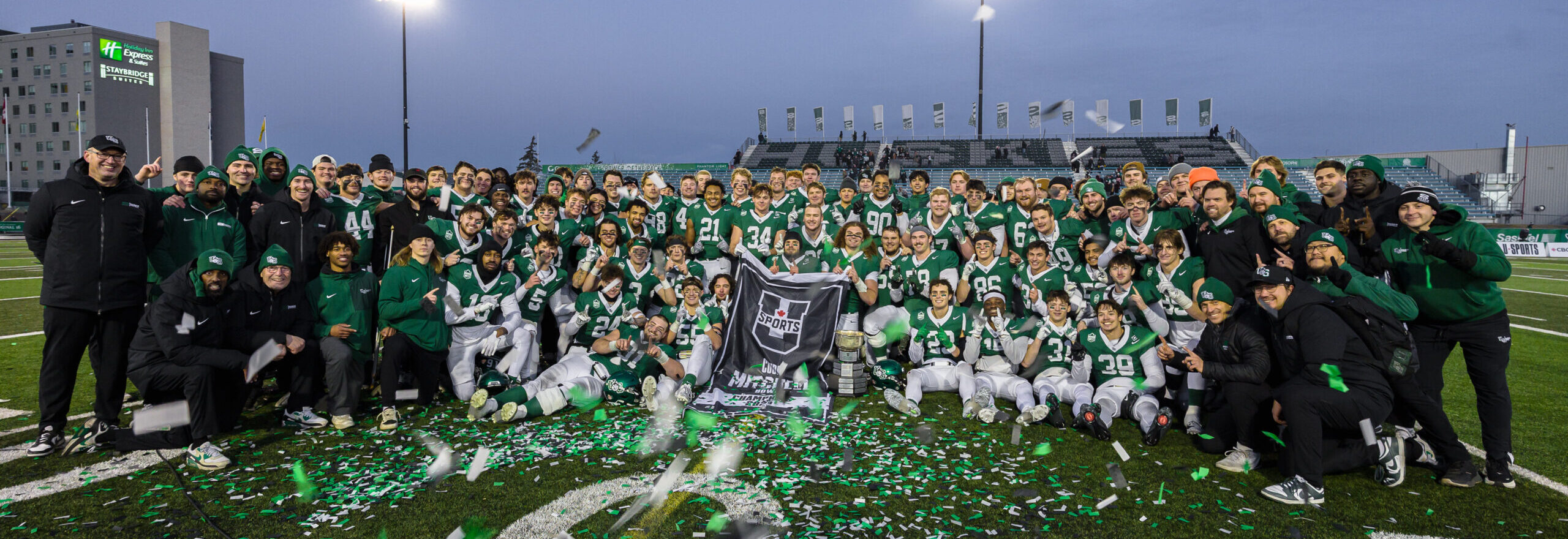
The Vanier Cup will kickoff on Saturday at 1 p.m. at Mosaic Stadium with the Huskies taking on the Montreal Carabins after each team won their respective semifinals. Montreal punched their ticket to the game by defeating the St. Mary’s Huskies 49-19 in the Uteck Bowl, while the Saskatchewan Huskies topped the Queen’s Gaels 22-11 in the Mitchell Bowl.

Along their journey to the Vanier, Saskatchewan also defeated the Regina Rams in the Canada West Hardy Cup, which has led to almost perfect and unique situation for Robertson.

“The only better scenario would be to have the actual hometown team, the Rams, playing in the game, but the second-best scenario is to have the U of S. So, for the first time, I’ll be cheering for the Huskies!”

Tickets for the Vanier Cup are still available here.

All The World’s A Stage For Free Flow Dancers 

By Ryan Flaherty for Sask Lotteries 

Artistic inspiration comes in many forms. It could be a beautiful sunset, the sound of rush hour traffic, maybe a pearl of wisdom from a grandparent. It can even come from other artistic works. 

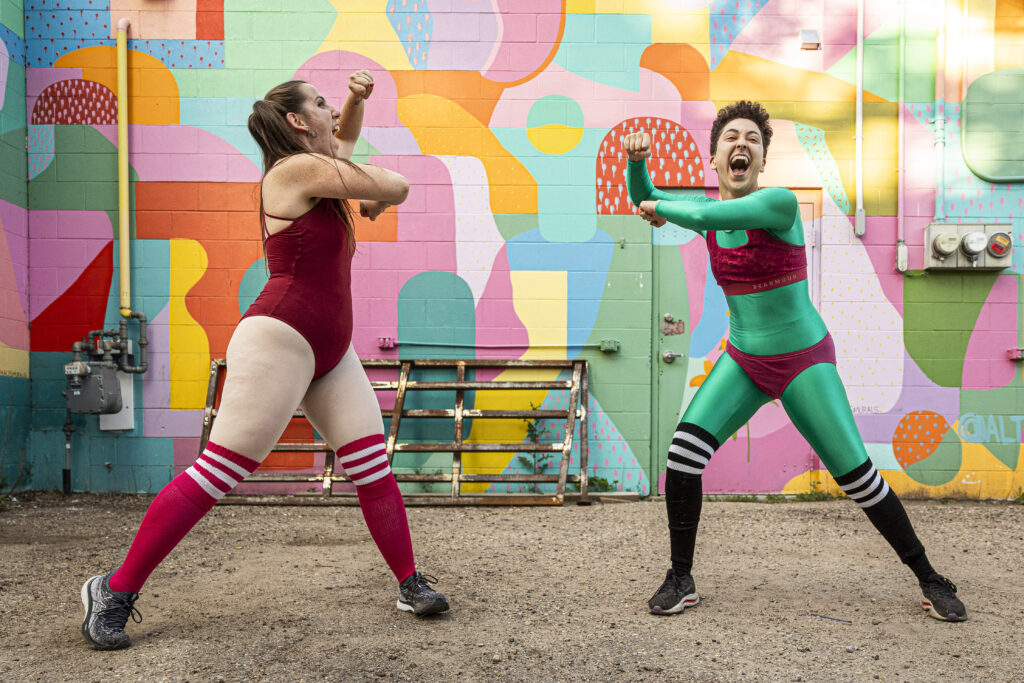
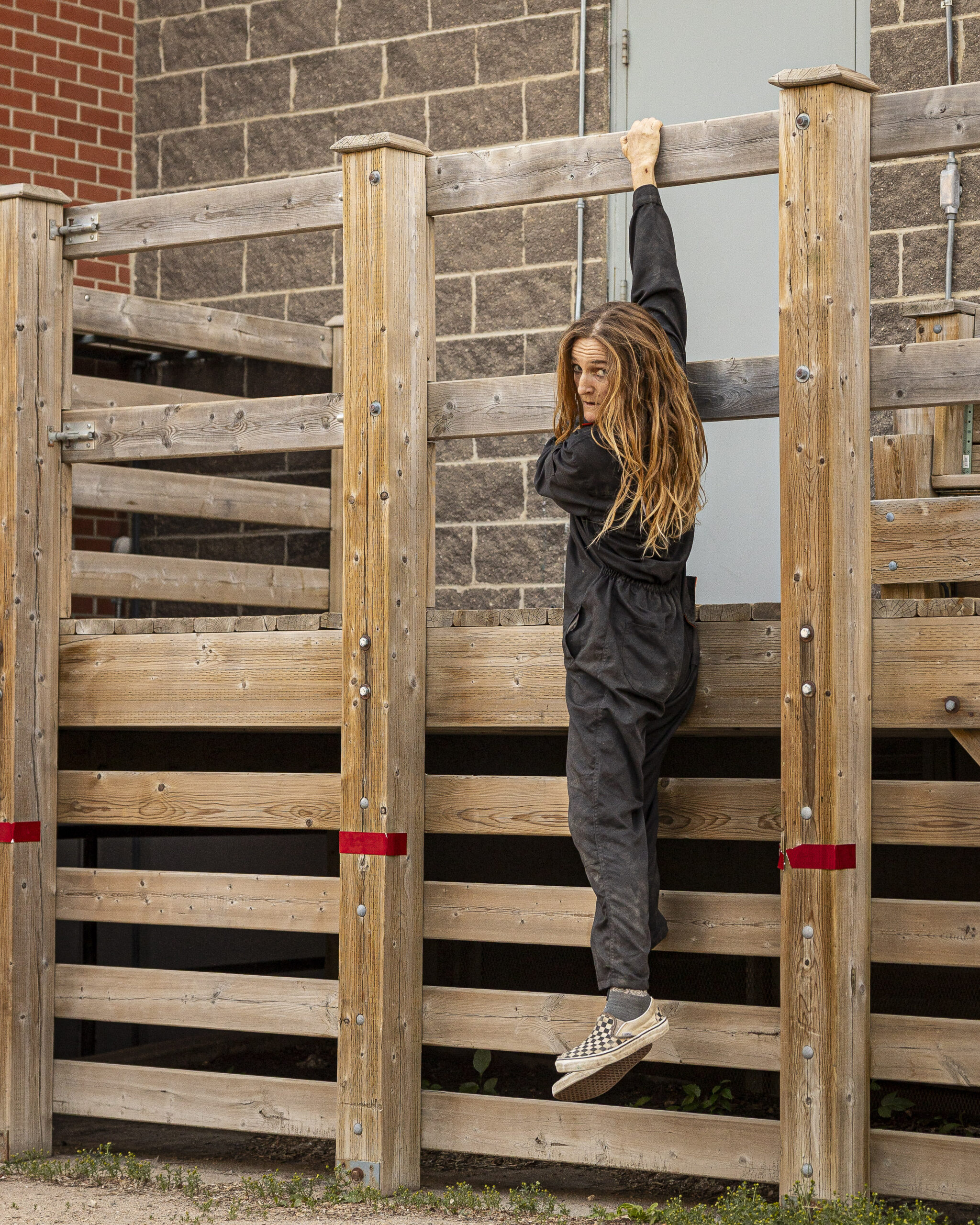
Every summer, members of the Free Flow Dance Theatre Company draw their inspiration from the Saskatoon cityscape for an annual performance series known as Back Alley Antics, which brings contemporary dance into unconventional outdoor spaces. This year, to mark the company’s 30th anniversary, the series returned to the Broadway area in Nutana where it first began. 

“We try to create acts that are location specific and directly inspired by the environment that they will be performed in,” Free Flow artistic director and choreographer Jackie Latendresse explained. 

The creative process began with performers exploring the alleyways of the Broadway district on foot, taking photographs of various sections to use for reference. Each performer then chose a specific location that inspired them and designed an act centered on that location. 

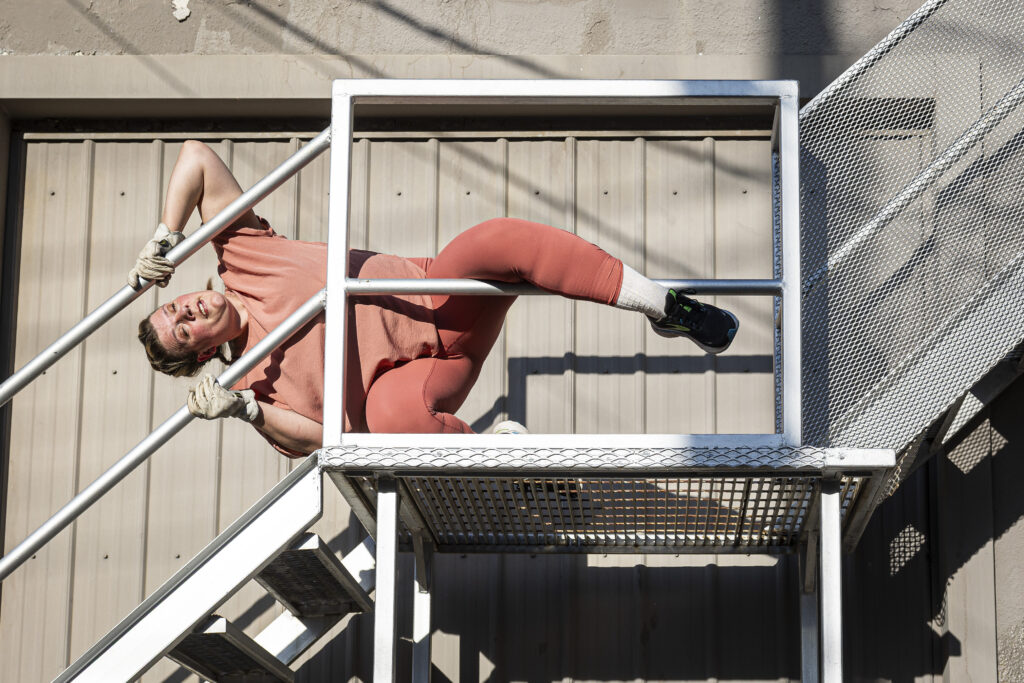
Latendresse and fellow artist Karla Kloeble collaborated on a piece that made use of a staircase attached to the back of a building. 

“We both enjoyed the challenge of creating movement designed around the specific architecture of the staircase, and the result was quite original,” Latendresse said. 

The Back Alley Antics program not only challenges traditional ideas of what may or may not be a performance space, it gives performers the opportunity to get outside and try something different. 

“Generally, the artists really appreciate getting out of the studio during summer months and working in unique spaces where it opens up the possibility for movement and choreography,” Latendresse said. 

The program has been going strong for more than two decades thanks in part to support from the Sask Lotteries Community Grant, which helps to cover the artists’ fees. The outdoor performances, in turn, strengthen the ties between company and community as the artists work with local businesses and property owners. 

“It is a great way to insert yourself into a neighbourhood and to continue to develop local interest in professional contemporary dance,” Latendresse said. 

And the next time you go down a back alley, you might look at it a bit differently. After all, inspiration can come from anywhere. 

Century celebration of the Mayfair Lawn Bowling Club 

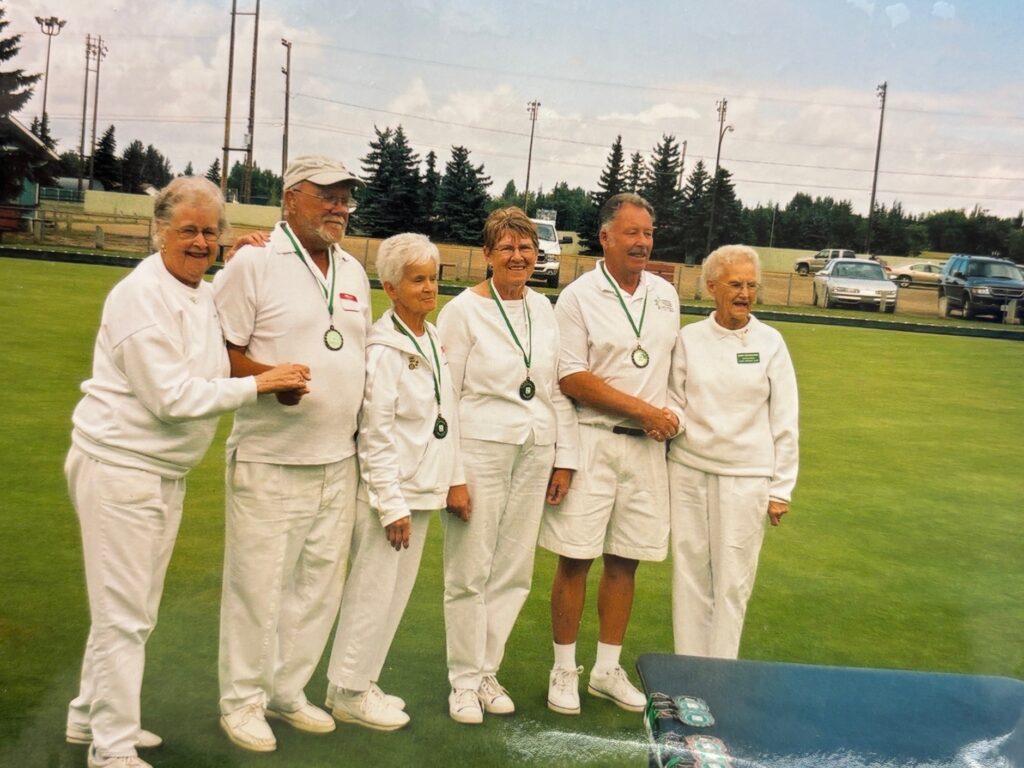
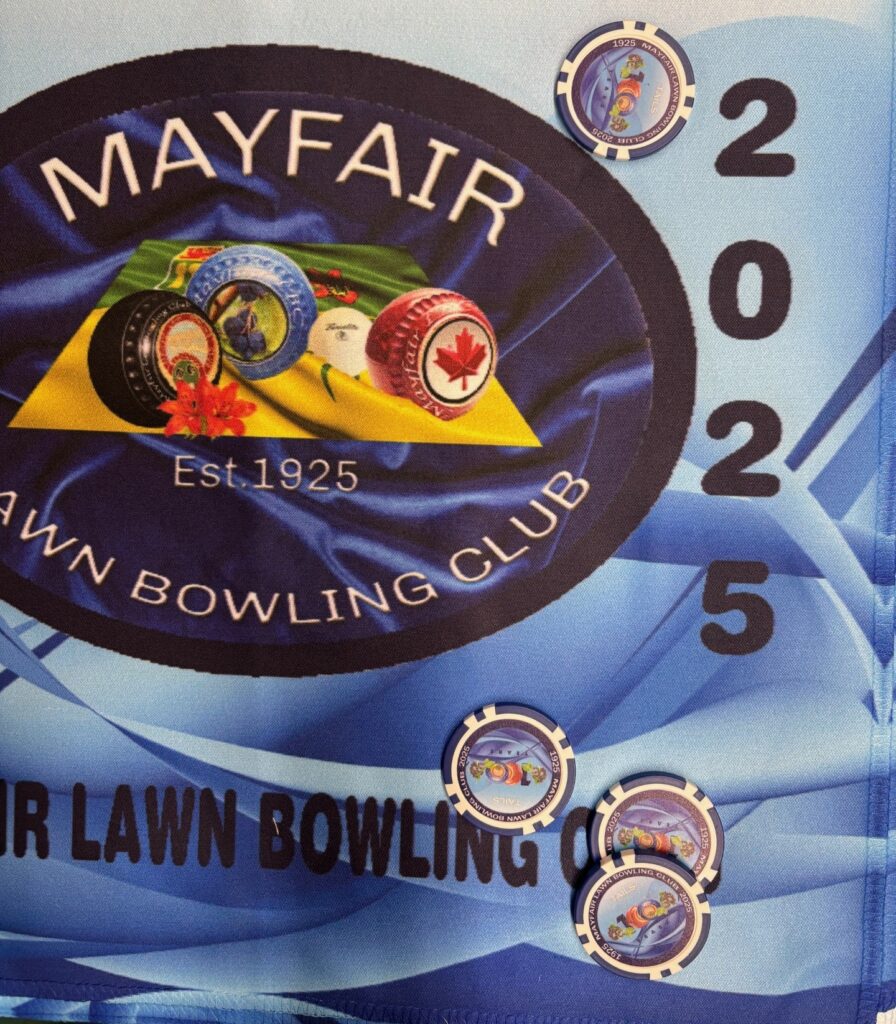
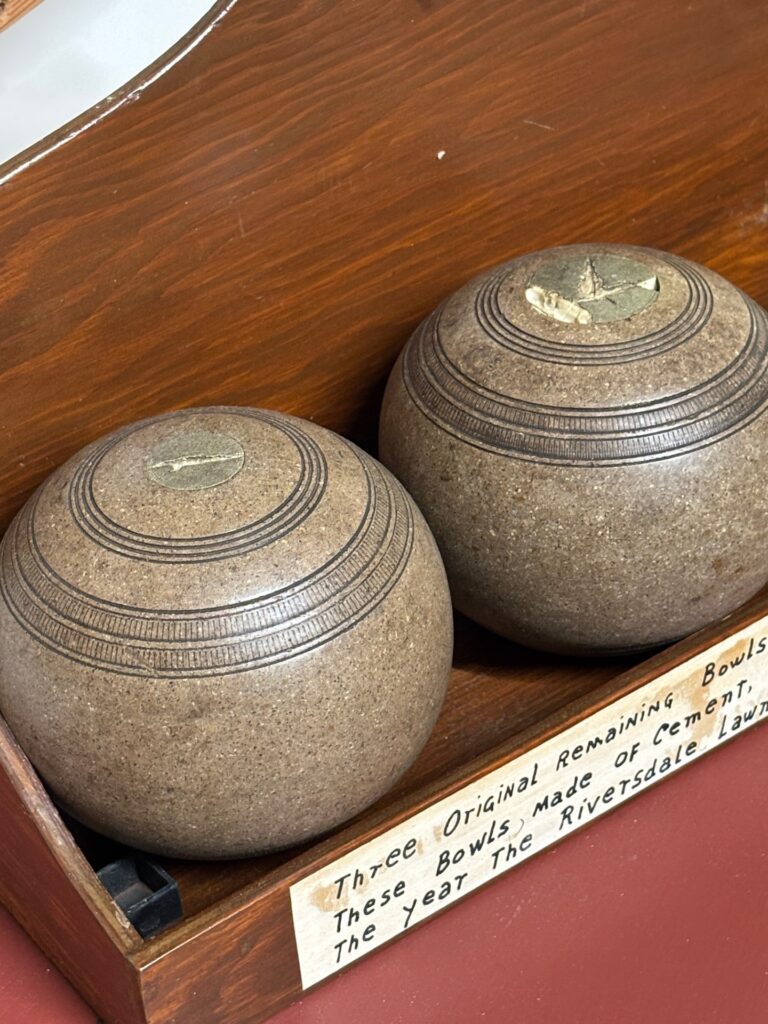
The walls of the Mayfair Lawn Bowling Club’s clubhouse are decorated with history. Photos, trophies and other memorabilia, including a pair of concrete bowls, catalogue the organization’s 100 years of operation, creating a time capsule of achievements, growth and evolution.

When Mayfair first opened its doors on May 25, 1925, it was a men’s-only club, overseen by then-president Major Binni. While women were allowed to join the club in the late 1920s, it came with restrictions, such as only bowling in the afternoon and a requirement to wear dresses. However, after a fundraising event held by the female members to help cover the cost of a new clubhouse and an additional green, those conditions were dissolved.

Flash forward to now, Arlene Chermishnok — the most recent woman to take on the president role —is now leading the club and its roughly 90 current members through a century celebration.

“Those of us who are bowling now enjoy the fact that we are able to get out there and bowl and the ground is still being used by people who carry on the tradition and the fun of the game,” said Chermishnok regarding the club’s 100-year anniversary.

It hasn’t always been easy to keep things running, Chermishnok admits, but through the power of their club community as well as help from grants and other financial assistance, like the Sask Sport Membership Assistance Program, funded by Sask Lotteries, they’ve been able to continue to host major events and bring in new members.

Sometimes those two goals even go hand-in-hand. Mayfair currently partners with the Saskatoon Catholic and public high school systems to offer lawn bowling courses for all special physical education (SPED) classes, which offers students the opportunity to learn sports not part of the regular curriculum. The project not only helps Mayfair generate self-funding but also exposes a new generation of bowler to the game, even if it’s not until later in life that those students return to bowling.

“Several hundred students came through,” said Chermishnok of the high school sessions, which ran in May and June. “So, it’s not that they don’t get exposure, it’s just that the kids are so busy doing other sports that they don’t get a chance to come back [to bowling] until maybe they are in their 40s.”

But once they do come back, members are typically hooked for years, with several hitting the quarter-century (or more) mark. While Chermishnok was brought along to bowling by a neighbour 10 years ago, the club has given out several 25-year membership pins in the last few years, including 2025, and have more slated for the coming years as well. It’s that kind of club history that that she is most proud of.

“Mayfair has enjoyed a reputation of being as friendly as possible, providing the best food we can possibly provide and making sure that everyone is welcomed to our club…each and every one of us are here to ensure that those who come to bowl, are enjoying the game. And that’s all you can do.”